If you’ve ever posted a video that looked good but still flopped, the problem usually isn’t editing.
It’s the script.
In 2026, short-form content success is no longer about just visuals. Platforms like TikTok, Instagram Reels, and YouTube Shorts are aggressively optimizing for watch time, retention curves, and hook strength in the first 1.5 seconds.
And here’s the game-changer:
You can now use AI to generate high-retention short-form scripts that are specifically engineered for virality.
Look, I’ve spent years breaking down viral content patterns frame-by-frame, and I can tell you this with confidence:
Editing gets attention, but scripting controls retention.
Let’s break it down like a professional VFX and content strategist working inside modern AI workflows.
Why High-Retention Scripts Matter in 2026
Short-form platforms don’t care how beautiful your video is.
They care about:
- Hook strength (first 1–2 seconds)
- Retention drop-off rate
- Rewatch behavior
- Emotional spikes
- Narrative pacing
A strong script controls all of this before editing even begins.
High-retention scripts are built to:
- Prevent early swipe-away
- Trigger curiosity loops
- Maintain pacing every 3–5 seconds
- Deliver payoff at the right moment
- Encourage rewatch behavior
And AI has completely changed how we build these scripts.
AI Tools Used for High-Retention Script Generation (2026 Workflow)
Modern creators no longer write scripts manually from scratch.
Instead, they use AI-assisted storytelling systems:
- CapCut → AI script-to-edit integration for short-form structure
- Runway ML → Visual story generation aligned with scripts
- Sora → AI cinematic storytelling and narrative simulation
- Advanced LLM tools → Script structuring, hooks, and pacing optimization
But here’s the truth:
AI doesn’t create viral scripts by default.
It creates raw structure. You refine it into retention-engineered storytelling.
CapCut AI vs Manual Script Writing (Retention Impact)
| Feature | AI Script Generation | Manual Writing |
|---|---|---|
| Speed | Extremely fast | Slow |
| Hook Optimization | AI-generated variations | Depends on skill |
| Retention Strategy | Data-driven patterns | Experience-based |
| Creativity Control | Moderate | Full control |
| Viral Potential | High (if guided properly) | Inconsistent |
AI gives you structure. Humans give it soul.
The winning combination is both.
Understanding High-Retention Script Structure
Before using AI, you must understand the viral script formula used in 2026:
1. Hook (0–2 seconds)
Grab attention instantly.
Examples:
- “Nobody tells you this about…”
- “This is why your videos aren’t going viral…”
- “I tested 100 edits and this is what worked…”
2. Problem (2–5 seconds)
Introduce pain point or curiosity gap.
3. Value Build (5–20 seconds)
Deliver structured information in micro-segments.
4. Payoff (20–35 seconds)
Reveal transformation, result, or insight.
5. Loop End (final seconds)
End in a way that encourages replay.
This structure is what AI must generate.
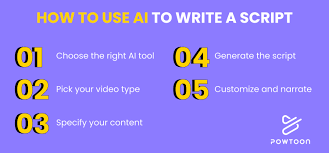
Step-by-Step: How to Use AI to Generate High-Retention Short-Form Scripts
Now let’s build a real workflow used by professional creators.
Step 1: Define Your Content Goal
Before AI generates anything, define:
- Platform (TikTok, Reels, Shorts)
- Video length (15s / 30s / 60s)
- Topic niche (VFX, gaming, fitness, storytelling)
- Emotional tone (shock, inspiration, curiosity, humor)
Here is the real talk about high-retention editing: AI output is only as good as your input direction.
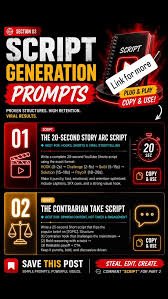
Step 2: Generate Multiple Hook Variations
Use AI to create 10–20 hook variations.
Example prompt:
“Generate 20 viral hooks for a 20-second short-form video about editing tricks for beginners.”
Then select:
- Most curiosity-driven hook
- Most emotionally engaging hook
- Most controversial hook
Hooks are 70% of retention success.
Step 3: Build Script Skeleton with AI
Now ask AI to structure full script:
Include:
- Hook
- Problem
- Steps (3–5 micro points)
- Payoff
- CTA
This is where tools like Runway ML can also align visuals with script pacing.
Step 4: Optimize for 3–5 Second Attention Cycles
Modern retention algorithms reset attention every few seconds.
So your script must:
- Shift idea every 3–5 seconds
- Introduce micro-curiosity loops
- Avoid long explanations
Example:
Instead of:
“This is how you edit better videos…”
Use:
“Most editors fail at this one thing… and it kills their reach.”
Step 5: Add Emotional Triggers
AI scripts become viral when emotional structure is added:
- Surprise
- Urgency
- Fear of missing out
- Curiosity gaps
- Transformation stories
Even simple edits become viral when emotion is layered properly.
Step 6: Convert Script into Visual Breakdown
Now align script with visuals:
- Scene change every sentence
- Overlay text for hooks
- Fast cuts for retention spikes
- Slow moments for payoff clarity
This is where CapCut AI integration becomes powerful.
Step 7: Sync Script with Editing Flow
Use tools like CapCut to:
- Auto-generate captions
- Match script timing to cuts
- Add AI transitions
- Enhance pacing using beat sync
This ensures script and edit feel like one system.
Step 8: Test Retention Variations
Professional creators never use one script version.
They test:
- Hook A vs Hook B
- Short vs extended pacing
- Emotional vs informational tone
AI makes this A/B testing extremely fast.
Pro Scriptwriting Checklist (2026 Standard)
Before finalizing your AI-generated script:
- ✔ Hook triggers curiosity in under 2 seconds
- ✔ Every 3–5 seconds introduces new information
- ✔ No unnecessary filler sentences
- ✔ Clear emotional arc exists
- ✔ Strong payoff or reveal included
- ✔ Loop-friendly ending designed
- ✔ Matches visual pacing strategy
Common Mistakes Beginners Make
Mistake 1: Overwriting Scripts
Too much explanation kills retention.
Mistake 2: Weak Hooks
If the first line fails, the video dies instantly.
Mistake 3: No Structure Control
Random AI output = random performance.
Mistake 4: Ignoring Visual Timing
Script must match edit pacing.
Even great ideas fail if timing is off.
Why AI Script Generation Works in 2026
AI models now understand:
- Viral content patterns
- Retention curves
- Emotional pacing structures
- Platform-specific algorithms
This means scripts are no longer “creative guesses” — they are data-informed storytelling systems.
But creativity still matters.
AI gives structure. You give impact.
Where vfxcut.xyz Comes In
At vfxcut.xyz, we break down real-world content systems used by viral creators—not theory, but production-ready workflows.
You’ll learn:
- AI-powered scripting systems
- Short-form retention editing techniques
- Visual storytelling frameworks
- Viral pacing strategies used by top creators
This is where beginners become strategic content engineers.
Final Thoughts
Learning how to use AI to generate high-retention short-form scripts is not about replacing creativity.
It’s about scaling it.
When done correctly, AI helps you:
- Build viral hooks faster
- Structure better pacing
- Improve retention systematically
- Reduce guesswork in content creation
But here’s the key truth:
AI writes scripts. You write impact.
CTA
Now it’s your turn.
Start using AI to generate script variations, test different hooks, and build structured retention-driven storytelling systems.
Then explore more advanced AI workflows, viral editing techniques, and short-form growth strategies on vfxcut.xyz, your ultimate hub for short-form creators and VFX enthusiasts.
Go create scripts that don’t just inform… but hold attention till the last second.